
Asthma can cause symptoms such as wheezing, coughing, chest tightness and breathlessness. For many people, regular preventer treatment is an important part of keeping these symptoms under control.
Qvar is a beclometasone inhaler used to help control asthma by reducing inflammation in the airways. Understanding how to use it correctly and why regular treatment matters can help you follow your prescribed asthma management plan.
If you have questions about your inhaler or notice that your symptoms are changing, speak to your pharmacist, GP or asthma nurse.
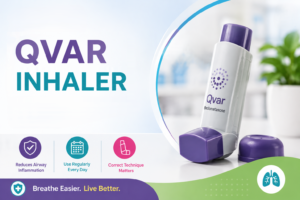
What Is the Qvar Inhaler?
Qvar contains beclometasone dipropionate, an inhaled corticosteroid. It works by reducing inflammation and swelling in the airways, making them less likely to become irritated and narrowed.
Qvar is a preventer inhaler, not a reliever for sudden asthma symptoms. It is intended to be used regularly as prescribed, even when you feel well.
If you experience a sudden asthma attack, follow your personal asthma action plan and use your prescribed reliever or anti-inflammatory reliever as directed. Do not rely on Qvar alone to treat sudden breathing difficulties.
What Are the Benefits of Using Qvar?
When prescribed appropriately and used consistently, an inhaled corticosteroid can help control asthma symptoms and reduce the risk of flare-ups.
Potential benefits include:
- Reducing inflammation in the airways.
- Helping prevent coughing and wheezing associated with asthma.
- Supporting better long-term symptom control.
- Reducing the likelihood of asthma worsening when treatment is used as prescribed.
The effect is not immediate. It may take time for regular treatment to provide its full benefit.
How Should You Use the Qvar Inhaler?
Always follow the instructions provided with your specific inhaler and the directions from your prescriber. Inhaler technique differs between devices, so do not assume that all inhalers are used in exactly the same way.
General advice includes:
- Check the device instructions before use.
- Make sure the inhaler is prepared correctly.
- Breathe out gently before inhaling, following the device-specific instructions.
- Inhale the medicine using the technique recommended for your inhaler.
- Hold your breath briefly if you can do so comfortably and if instructed.
- Replace the cap and store the inhaler as directed.
Ask a pharmacist or asthma nurse to check your technique if you are unsure. Correct use helps ensure that the medicine reaches your airways.
Why Is Regular Use Important?
Asthma inflammation can persist even when you have no obvious symptoms. Using a preventer inhaler consistently helps control this underlying inflammation.
Do not stop treatment simply because your breathing improves. If your asthma is well controlled and you believe your dose could be reduced, discuss this with your prescriber rather than making changes yourself.
Keep track of your inhaler supply and make sure you have a plan for obtaining repeat prescriptions before it runs out.
Why Should You Rinse Your Mouth After Use?
Inhaled corticosteroids can cause local side effects, including oral thrush, a sore mouth or hoarseness. Rinsing your mouth with water and spitting it out after using your inhaler can help reduce the risk of these effects. Follow the product instructions, and ask a healthcare professional whether a spacer or a different device could help with your technique.
Common side effects may include:
- Oral thrush.
- A dry or sore throat.
- Hoarse voice.
Seek advice if these symptoms persist or become troublesome.
When Should You Seek Medical Advice?
Contact your GP or asthma team if your symptoms are worsening, you are waking at night because of asthma, or you need your reliever more frequently than usual.
These may be signs that your asthma needs a review.
If you have severe difficulty breathing, cannot speak in full sentences or your prescribed reliever is not helping during an asthma attack, seek emergency medical help.
Contact Zenith Pharmacy on 0121 554 9944 to know more about the pharmacy services and medication support you need.
Frequently Asked Questions
Is Qvar a reliever inhaler?
No. Qvar is a preventer inhaler and is not intended to treat sudden asthma attacks.
Should I use Qvar when I feel well?
Use it regularly as prescribed, even when symptoms are absent, unless your prescriber changes your treatment plan.
Can Qvar cause oral thrush?
Yes, oral thrush is a possible side effect. Rinse your mouth and spit out the water after use, and ask for advice if symptoms develop.
What if my asthma symptoms get worse?
Follow your asthma action plan and seek a clinical review. Severe breathing difficulty requires emergency assistance.
Get Advice About Your Inhaler
Correct inhaler technique and regular use are important parts of asthma management. If you are unsure how to use your Qvar inhaler or are experiencing side effects, ask a healthcare professional to review your technique and treatment.
Disclaimer: This article is intended for general information and does not replace individual medical advice, diagnosis, or treatment. Always follow the instructions provided with your medicine and speak to a pharmacist, doctor, or prescriber if you have questions about your treatment.
