Choosing contraception is personal. The right option depends on your health, lifestyle, medical history and preferences. Levest is one combined contraceptive pill available on prescription in the UK. It contains two hormones and, when taken correctly, is highly effective at preventing pregnancy.
Levest is not suitable for everyone. A pharmacist, doctor, nurse or other qualified prescriber should assess your blood pressure, medical history and risk factors before prescribing it. This guide explains what Levest contains, how it works, how it is usually taken, its potential benefits and risks, and how it compares with pills containing the same hormones.
What is Levest?
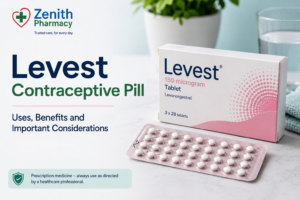
Levest 150/30 microgram coated tablets is a monophasic combined oral contraceptive (COC), commonly called the combined pill. Every active tablet contains the same two hormones:
- 150 micrograms of levonorgestrel, a progestogen
- 30 micrograms of ethinylestradiol, an oestrogen
Levest is a prescription-only medicine. It is supplied in packs of 21 active tablets. Unlike Gedarel, Levest is not marketed in separate 20-microgram and 30-microgram oestrogen strengths; ‘150/30’ describes the amount of levonorgestrel and ethinylestradiol in each Levest tablet.
Levest does not protect against sexually transmitted infections (STIs). Condoms can help reduce the risk of STI transmission.
How does the Levest pill work?
The two hormones in Levest work together mainly by preventing ovulation, so an egg is not released from the ovary. They also thicken cervical mucus, making it harder for sperm to pass through the cervix, and change the lining of the womb.
The combined pill is more than 99% effective when it is used correctly all the time. With typical use, effectiveness is lower because pills may be taken late or missed. Vomiting, severe diarrhoea and some medicines can also reduce protection.
How is Levest taken?
The licensed regimen is one tablet at about the same time each day for 21 days, followed by a 7-day tablet-free interval. A withdrawal bleed usually occurs during this interval. The next pack is started after seven pill-free days, even if bleeding has not finished.
If Levest is started on the first day of a menstrual period, contraceptive protection begins immediately. Starting at another time, switching from a different method, restarting after a break, or starting after pregnancy may require different advice or additional contraception. Follow the instructions supplied with your medicine and the advice of your prescriber.
Some people use tailored combined-pill regimens with shorter, fewer or no breaks. These regimens can be clinically appropriate, but you should agree the plan with a healthcare professional and follow the instructions they provide.
What if you miss a Levest pill?
The correct action depends on how late the pill is, how many tablets have been missed and where you are in the pack. Take the most recently missed pill as soon as possible, but check the Levest patient leaflet or obtain prompt advice from a pharmacist or sexual health service for the full instructions. You may need condoms for seven days, may need to start the next pack without a break, or may need emergency contraception in some circumstances.
Do not rely on a general missed-pill rule if you are unsure. Tell the healthcare professional that Levest is a 21-day combined pill containing levonorgestrel 150 micrograms and ethinylestradiol 30 micrograms.
Vomiting or diarrhoea
Vomiting within about four hours of taking a tablet may mean it was not fully absorbed. Prolonged or severe diarrhoea can also reduce protection. Continue taking tablets, consult the patient leaflet and ask a pharmacist or clinician whether you need another tablet or additional contraception. If illness occurs near the end of the pack, you may be advised to start the next pack without a pill-free interval.
Potential benefits of Levest
The main use of Levest is contraception. Combined pills can also offer non-contraceptive benefits for some people, although individual experiences vary. These may include:
- more regular and predictable bleeding
- lighter periods
- less painful periods
- improvement in some period-related symptoms
These potential benefits do not make Levest suitable for everyone and should be weighed against individual risks.
Levest and similar combined contraceptive pills
Several UK combined pills contain the same active ingredients at the same strength as Levest: 150 micrograms levonorgestrel and 30 micrograms ethinylestradiol.
| Brand | Levonorgestrel | Ethinylestradiol |
| Levest | 150 micrograms | 30 micrograms |
| Microgynon 30 | 150 micrograms | 30 micrograms |
| Rigevidon | 150 micrograms | 30 micrograms |
| Ovranette | 150 micrograms | 30 micrograms |
| Maexeni 30/150 | 150 micrograms | 30 micrograms |
These products have the same hormonal ingredients and doses, but their manufacturers, tablet appearance and inactive ingredients may differ. A pharmacist may supply an equivalent product where appropriate. If you have allergies or intolerances, check the patient leaflet; Levest contains lactose and sucrose.
Other combined pills may contain different progestogens, different oestrogen doses or different dosing schedules. They should not be assumed to be equivalent to Levest solely because they are combined pills.
Who may be suitable for Levest?
Levest may be suitable for someone who wants an oral combined hormonal contraceptive and has no medical contraindication. Before prescribing, a healthcare professional will normally confirm that pregnancy can reasonably be excluded and review factors such as:
- age and smoking status
- blood pressure and body mass index
- migraine history, especially migraine with aura
- personal or family history of blood clots, stroke or heart disease
- medical conditions, including liver disease, diabetes and high blood pressure
- current medicines and herbal products
- recent childbirth, planned surgery or periods of reduced mobility
Who may need to avoid Levest?
Combined hormonal contraception is not suitable for everyone. Levest may be contraindicated or require specialist assessment if you have, or have had, a blood clot; a clotting disorder; stroke, transient ischaemic attack, heart attack or angina; migraine with aura; severe or uncontrolled high blood pressure; certain liver conditions or liver tumours; breast cancer; or diabetes with vascular complications.
Age, smoking, obesity and multiple cardiovascular or clotting risk factors also matter. In particular, people aged 35 or over who smoke are generally advised to use a different contraceptive method. Suitability must be assessed individually rather than from a checklist alone.
Blood-clot risk
All combined hormonal contraceptives increase the risk of a venous blood clot compared with not using one. Levonorgestrel-containing pills such as Levest are in the group associated with the lowest risk of venous thromboembolism among combined hormonal contraceptives.
The Levest product information estimates that about 6 in 10,000 users of a levonorgestrel-containing combined hormonal contraceptive will develop a venous blood clot in one year, compared with about 2 in 10,000 people who are neither pregnant nor using a combined hormonal contraceptive. Individual risk can be higher, and the risk is greatest during the first year of use and when restarting after a break of four weeks or more.
Seek urgent medical help for possible clot symptoms, including swelling, pain, warmth or colour change in one leg; sudden unexplained breathlessness; sharp chest pain; coughing blood; sudden weakness or numbness; problems speaking or seeing; or a sudden severe headache.
Possible side effects
Like all medicines, Levest can cause side effects, although not everyone gets them. Reported effects include nausea, abdominal pain, headache, mood changes or low mood, breast pain or tenderness, and changes in bleeding. Spotting or breakthrough bleeding can occur, particularly during the first few months.
Some effects settle as the body adjusts. Speak to a pharmacist or doctor if symptoms are persistent, troublesome or new. Seek urgent advice for severe symptoms or signs of a clot, stroke, heart problem, severe allergic reaction, jaundice or a major rise in blood pressure.
Medicines and supplements to discuss
Tell your prescriber and pharmacist about all prescription medicines, over-the-counter products and herbal remedies. Some medicines can reduce contraceptive effectiveness or alter bleeding, including certain treatments for epilepsy, tuberculosis, HIV or hepatitis C, and the herbal remedy St John’s wort. Some medicines have clinically important contraindications or interactions with combined pills.
Levest can also affect other medicines, including lamotrigine. Do not stop a prescribed medicine or change contraception without professional advice. If an interacting medicine is started, ask whether additional contraception or a different method is required and for how long.
When to speak to a healthcare professional
Contact a pharmacist, doctor, nurse or sexual health service if:
- you are considering starting or restarting Levest
- you have missed pills or had vomiting or severe diarrhoea
- you start, stop or change another medicine or herbal product
- you develop migraine with aura, a significant health change or a marked rise in blood pressure
- side effects are persistent or affecting your quality of life
- you may be pregnant or want to change contraceptive method
- you are planning major surgery or expect prolonged immobility
Frequently asked questions about Levest
What is Levest used for?
Levest is a combined hormonal contraceptive used primarily to prevent pregnancy. Combined pills may also make bleeding more regular, lighter and less painful for some people.
What hormones are in Levest?
Each tablet contains 150 micrograms of levonorgestrel and 30 micrograms of ethinylestradiol.
Is Levest the same as Microgynon 30 or Rigevidon?
Levest, Microgynon 30 and Rigevidon contain the same two hormones at the same strengths and use a 21-day licensed regimen. Brand, appearance and inactive ingredients can differ. Ask a pharmacist or prescriber if you have concerns about switching brands.
Does Levest protect against STIs?
No. Levest prevents pregnancy but does not protect against sexually transmitted infections. Condoms can help reduce STI transmission.
Can Levest make periods lighter?
Combined pills can make withdrawal bleeds more regular, lighter and less painful for some people, but responses vary.
Can I take Levest continuously?
Some people use a tailored combined-pill regimen with fewer or no breaks. Ask a qualified healthcare professional for an individual plan rather than changing the regimen without advice.
Understanding your Levest options
Levest is a 21-day combined contraceptive pill containing levonorgestrel 150 micrograms and ethinylestradiol 30 micrograms. It can be effective and convenient, and levonorgestrel-containing combined pills are associated with the lowest venous-clot risk among combined hormonal contraceptives. Nevertheless, no combined pill is risk-free or suitable for everyone.
A qualified prescriber should consider your blood pressure, age, smoking status, migraine history, medical and family history, other medicines and personal preferences. Existing users should seek advice after missed pills, troublesome side effects, new medicines or relevant changes in health.
| Important: This article provides general information and does not replace individual medical advice, diagnosis or treatment. Levest is a prescription-only medicine. Always read the patient information leaflet supplied with your medicine and follow the advice of your prescriber. |
Sources reviewed
- Electronic Medicines Compendium (emc): Levest 150/30 microgram Coated Tablets — Summary of Product Characteristics and Patient Information Leaflet.
- NHS: Combined contraceptive pill guidance, including effectiveness, suitability, taking the pill, missed pills, and vomiting or diarrhoea.
- Faculty of Sexual & Reproductive Healthcare (FSRH): Combined Hormonal Contraception guideline and guidance on combined hormonal contraception regimens.