
Planning a holiday, business trip or extended stay in a country where malaria occurs? Preparing for travel involves more than booking flights and accommodation. Depending on your destination, you may need vaccinations, mosquito bite prevention measures and antimalarial medication.
Malarone is a medicine used to help prevent malaria in travellers visiting certain areas where the infection occurs. However, it is not suitable for everyone, and the right choice depends on your destination, travel plans and medical history.
Zenith Pharmacy’s Travel Clinic can help you enquire about travel health services and the options available for preparing for your trip.
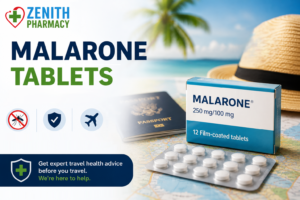
What Is Malarone?
Malarone contains two active ingredients: atovaquone and proguanil. These medicines act against the malaria parasite and are used together to help prevent infection.
Malaria is transmitted through the bites of infected mosquitoes. It can cause symptoms such as fever, chills, headache, muscle aches, and fatigue. Some forms of malaria can become severe and require urgent medical treatment.
The need for antimalarial medication depends on where you are travelling. Not every country, or region within a country, has the same malaria risk.
Who May Need Malarone Tablets?
Malarone may be recommended for travellers visiting destinations where atovaquone/proguanil is an appropriate malaria prevention option.
A travel health assessment should consider:
- Your destination and the areas you plan to visit.
- The length of your stay.
- Whether you will be travelling in rural or urban locations.
- Your age and weight, where relevant to dosing.
- Your medical history, including kidney problems.
- Pregnancy or breastfeeding considerations.
- Other medicines you take.
Malarone is not automatically the best option for every traveller. Other antimalarial medicines may be more appropriate depending on local parasite resistance patterns, individual health factors and current travel recommendations.
When Should You Start Taking Malarone?
For malaria prevention, the usual adult regimen is to begin taking Malarone one or two days before entering an area where malaria occurs. It is then taken daily throughout the stay and for seven days after leaving the malaria-risk area.
The exact dose depends on the prescribed or supplied formulation and the person’s circumstances. Children’s doses are based on weight and must be assessed carefully.
Malarone is generally taken with food or a milky drink to help absorption. Follow the instructions supplied with your medicine and those provided by your healthcare professional.
Do not stop the course early simply because you have returned home or feel well. Completing the recommended course is an important part of malaria prevention.
If you vomit shortly after taking a dose or miss a dose, check the patient information leaflet and seek advice from a pharmacist or prescriber about what to do.
Common Side Effects of Malarone
Some people experience side effects while taking Malarone. These can include:
- Headache.
- Feeling sick or vomiting.
- Stomach discomfort.
- Diarrhoea.
Side effects vary between individuals. If symptoms are severe, persistent or concerning, seek medical advice.
People with kidney problems may need particular assessment before using atovaquone/proguanil. If you are pregnant, breastfeeding, planning pregnancy or taking other medicines, discuss this with your healthcare professional before starting treatment.
Malaria Prevention Involves More Than Tablets
Antimalarial medication reduces risk but does not guarantee that you will not develop malaria.
Travellers should also take measures to prevent mosquito bites, such as:
- Using an appropriate insect repellent.
- Wearing long-sleeved clothing and trousers when practical.
- Sleeping in rooms with suitable screens or air conditioning where available.
- Using an insecticide-treated mosquito net when recommended.
- Following destination-specific travel health advice.
If you develop a fever during your trip or after returning from a malaria-risk area, seek urgent medical assessment. Tell the healthcare professional where you have travelled, even if you took antimalarial tablets correctly.
Why Seek Travel Health Advice Before Departure?
A travel consultation can help you understand the risks associated with your itinerary and identify appropriate prevention measures.
Ideally, arrange travel health advice several weeks before departure. This gives you time to review your medical history, arrange recommended vaccinations, and start any medicines you need before entering a malaria-risk area.
Some destinations require a different antimalarial medicine, while certain travellers may need additional precautions.
Contact Zenith Pharmacy on 0121 554 9944 or visit the Travel Clinic page to enquire about an appointment before your trip.
Frequently Asked Questions
Can I buy Malarone tablets without advice?
The appropriate supply route depends on the product and applicable UK requirements. Ask a pharmacist or travel health professional about suitability and the correct supply arrangements.
Does Malarone prevent every type of malaria?
No medicine offers complete protection. The appropriate antimalarial depends on the destination, and mosquito bite prevention remains important.
Can I stop taking Malarone when I leave the destination?
No. The usual prevention course continues for seven days after leaving the malaria-risk area. Follow your individual instructions.
When should I arrange a travel consultation?
Arrange advice as early as possible, ideally several weeks before travelling.
Prepare for Your Trip with Zenith Pharmacy
If you are looking for Malarone tablets in Birmingham or need malaria prevention advice, Zenith Pharmacy’s Travel Clinic can help you enquire about available travel health services.
Disclaimer: This article is intended for general information and does not replace individual medical advice, diagnosis, or treatment. Always follow the instructions provided with your medicine and speak to a pharmacist, doctor or prescriber if you have questions about your treatment.
