
Joint pain, stiffness and inflammation can affect everyday activities, particularly in people living with conditions such as osteoarthritis, rheumatoid arthritis or ankylosing spondylitis. Depending on the condition and individual circumstances, a healthcare professional may prescribe an anti-inflammatory medicine to help manage symptoms.
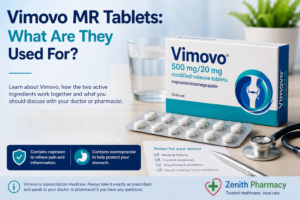
Vimovo MR tablets are a prescription medicine that combine two active ingredients: naproxen and esomeprazole. The two ingredients have different roles. Naproxen helps reduce pain and inflammation, while esomeprazole reduces stomach acid and helps protect against certain stomach and intestinal problems associated with non-steroidal anti-inflammatory drugs (NSAIDs).
So, what is Vimovo used for, and why are these two medicines combined in one tablet? This guide explains the main uses of Vimovo, how it works and the important considerations to discuss with a doctor or pharmacist.
What Is Vimovo MR?
Vimovo is a modified-release tablet containing two medicines:
- Naproxen 500 mg
- Esomeprazole 20 mg
Naproxen belongs to a group of medicines called non-steroidal anti-inflammatory drugs, commonly known as NSAIDs. It helps reduce pain and inflammation.
Esomeprazole belongs to a group of medicines called proton pump inhibitors (PPIs). It reduces the amount of acid produced in the stomach.
Vimovo is indicated for adults with symptoms associated with osteoarthritis, rheumatoid arthritis and ankylosing spondylitis when an NSAID is required and there is an increased risk of developing an NSAID-associated stomach or duodenal ulcer.
This means Vimovo is not simply a general-purpose painkiller. It is prescribed for particular circumstances where anti-inflammatory treatment is required and stomach protection is also considered important.
As Vimovo is a prescription medicine, it should only be taken when prescribed for you and according to the instructions provided by your healthcare professional.
What Is Vimovo Used For?
The main Vimovo uses are the symptomatic treatment of:
- Osteoarthritis
- Rheumatoid arthritis
- Ankylosing spondylitis
These conditions can cause different patterns of pain, stiffness and inflammation.
Vimovo can help relieve symptoms by reducing inflammation and pain associated with these conditions. However, it does not cure the underlying condition or necessarily prevent the condition from progressing.
The prescribing decision depends on factors such as the severity of symptoms, previous treatments, other medicines and the individual’s risk of NSAID-related stomach complications.
How Do the Ingredients in Vimovo Work?
The two ingredients in naproxen esomeprazole work in different ways.
Naproxen
Naproxen is an NSAID. It works by reducing the production of substances involved in pain and inflammation.
This can help reduce symptoms such as:
- Joint pain
- Swelling
- Stiffness
- Inflammation
Naproxen is used for several conditions involving pain and inflammation, including osteoarthritis and rheumatoid arthritis.
Esomeprazole
Esomeprazole is a proton pump inhibitor. It reduces the production of stomach acid.
NSAIDs can increase the risk of stomach and duodenal ulcers and other gastrointestinal problems in some people. Esomeprazole is included in Vimovo to help reduce the risk of these NSAID-associated problems in appropriate patients.
The combination therefore provides two different actions in a single modified-release tablet: naproxen provides the anti-inflammatory effect, while esomeprazole provides acid suppression.
Vimovo and Osteoarthritis
Osteoarthritis is a common condition that can affect joints such as the knees, hips and hands. It can cause pain, stiffness and difficulty moving the affected joint.
NSAIDs such as naproxen can be used to help manage pain and inflammation associated with osteoarthritis when appropriate.
The NHS explains that NSAIDs can help reduce pain and inflammation in osteoarthritis, although the choice of treatment depends on the individual and the affected joints.
Vimovo for arthritis may therefore be prescribed for adults with osteoarthritis when the clinical circumstances meet the medicine’s licensed indication, particularly where there is also a concern about NSAID-associated ulcers.
Vimovo is not necessarily appropriate for every person with osteoarthritis. A healthcare professional will consider the benefits and potential risks before prescribing it.
Vimovo and Rheumatoid Arthritis
Rheumatoid arthritis is an inflammatory condition that can cause pain, swelling and stiffness in the joints.
NSAIDs such as naproxen may help relieve pain and inflammation associated with rheumatoid arthritis. However, they do not stop rheumatoid arthritis from getting worse over time.
Vimovo can be used in adults for symptomatic treatment of rheumatoid arthritis when the prescribing criteria are met. Its naproxen component provides the anti-inflammatory and pain-relieving effect, while esomeprazole helps reduce the risk of NSAID-associated stomach problems.
If you have rheumatoid arthritis, your overall treatment plan may involve other medicines in addition to an NSAID. Your rheumatology or healthcare team can advise on the most appropriate treatment for your condition.
Vimovo and Ankylosing Spondylitis
Ankylosing spondylitis is a condition that can cause inflammation and pain, particularly around the spine and other joints.
NSAIDs are commonly used to help manage pain and stiffness associated with ankylosing spondylitis. The NHS notes that NSAIDs such as naproxen can help relieve pain and inflammation in people with this condition.
Vimovo is indicated for the symptomatic treatment of ankylosing spondylitis in adults when the appropriate prescribing conditions are met.
The treatment required can vary from person to person, so it is important to follow the advice of your doctor or rheumatology team.
Why Does Vimovo Contain Esomeprazole?
One of the distinctive features of Vimovo is that it combines an NSAID with a proton pump inhibitor.
Naproxen can be effective for reducing pain and inflammation, but NSAIDs can also cause stomach and intestinal problems, including ulcers and bleeding.
This is because NSAIDs can interfere with mechanisms that help protect the stomach lining.
Esomeprazole reduces stomach acid and is included in Vimovo to help reduce the risk of NSAID-associated gastric and duodenal ulcers in appropriate patients.
The NHS also notes that people prescribed NSAID tablets are often given a proton pump inhibitor alongside them to help reduce the risk of stomach problems.
However, the presence of esomeprazole does not mean Vimovo eliminates all gastrointestinal risks associated with naproxen.
It remains important to take Vimovo exactly as prescribed and tell your healthcare professional if you have previously experienced stomach ulcers or bleeding.
Important Things to Discuss Before Taking Vimovo
Before starting Vimovo, make sure your doctor or pharmacist knows about your medical history and all the medicines you take.
This is particularly important if you have:
- A history of stomach or intestinal ulcers
- Previous gastrointestinal bleeding
- Heart problems
- Kidney problems
- Liver problems
- High blood pressure
- Asthma triggered by aspirin or other NSAIDs
- Allergies to naproxen, esomeprazole or similar medicines
- A bleeding disorder
- Other significant medical conditions
Vimovo may not be suitable for people with certain medical conditions. For example, the current UK patient information states that it should not be taken by people with severe liver, kidney or heart problems, an existing stomach or gut ulcer, certain bleeding disorders or an allergy to its ingredients.
You should also tell your healthcare professional about all medicines you take, including over-the-counter medicines and supplements.
In particular, do not assume that another NSAID can automatically be taken alongside Vimovo. Combining NSAIDs can increase the risk of adverse effects.
Possible Side Effects and Precautions
Like all medicines, Vimovo can cause side effects.
Some people may experience digestive symptoms such as:
- Indigestion
- Stomach discomfort
- Nausea
- Diarrhoea
- Constipation
Other side effects may occur because of either naproxen or esomeprazole.
NSAIDs can cause potentially serious gastrointestinal complications, including ulcers and bleeding. Vimovo’s esomeprazole component helps reduce the risk of certain NSAID-associated stomach and duodenal ulcers, but it does not completely remove the risk.
There are also cardiovascular considerations with NSAIDs. The Vimovo patient information leaflet states that medicines such as Vimovo may be associated with a small increase in the risk of heart attack or stroke, with risk more likely at higher doses and with longer treatment.
For this reason, Vimovo should be used at the prescribed dose and for the duration recommended by your healthcare professional.
Seek urgent medical attention if you experience symptoms such as severe allergic reactions, signs of gastrointestinal bleeding, severe skin reactions, chest pain or difficulty breathing.
How Should Vimovo Be Taken?
Always follow the dosage instructions given by your prescriber.
The current UK product information states that Vimovo tablets should generally be swallowed whole with water and should not be split, crushed or chewed. The modified-release formulation is designed to deliver its ingredients appropriately.
Taking the medicine exactly as directed is important. Do not take more than the prescribed dose or use it for longer than recommended without speaking to your healthcare professional.
If you forget a dose, follow the instructions provided with your medicine or ask your pharmacist what to do. Avoid taking an extra dose simply to compensate unless your healthcare professional has advised you to do so.
Frequently Asked Questions About Vimovo
What is Vimovo?
Vimovo is a prescription modified-release medicine containing naproxen 500 mg and esomeprazole 20 mg. Naproxen is an NSAID that reduces pain and inflammation, while esomeprazole reduces stomach acid.
What are Vimovo MR tablets used for?
Vimovo MR tablets are used in adults for the symptomatic treatment of osteoarthritis, rheumatoid arthritis and ankylosing spondylitis in appropriate patients who require NSAID treatment and have an increased risk of NSAID-associated gastric or duodenal ulcers.
Is Vimovo a painkiller?
Vimovo contains naproxen, which is an NSAID that provides pain-relieving and anti-inflammatory effects. However, Vimovo also contains esomeprazole to reduce stomach acid and help protect against certain NSAID-associated stomach problems.
Is Vimovo used for arthritis?
Yes. Vimovo for arthritis may be prescribed for adults with osteoarthritis or rheumatoid arthritis when appropriate. It is also indicated for ankylosing spondylitis.
Why are naproxen and esomeprazole combined?
Naproxen helps relieve pain and inflammation, while esomeprazole reduces stomach acid and helps reduce the risk of certain ulcers associated with NSAID treatment.
Can everyone take Vimovo?
No. Vimovo is not suitable for everyone. Certain stomach, kidney, liver, heart and bleeding conditions, allergies and other medicines may affect whether it can be prescribed. Your doctor or pharmacist should assess your individual circumstances.
Can Vimovo cause stomach problems?
Although esomeprazole is included to help reduce the risk of NSAID-associated ulcers, Vimovo can still cause gastrointestinal side effects and serious stomach or intestinal complications can occur. Report unusual stomach pain, bleeding or other concerning symptoms to your healthcare professional.
Is Vimovo available on prescription in the UK?
Yes. Vimovo 500 mg/20 mg modified-release tablets are a prescription-only medicine in the UK.
Understanding Vimovo and Its Uses
So, what is Vimovo and why might it be prescribed?
Vimovo is a combination medicine containing naproxen and esomeprazole. Naproxen helps manage pain and inflammation, while esomeprazole reduces stomach acid and helps lower the risk of certain NSAID-associated ulcers.
Its licensed uses include symptomatic treatment of osteoarthritis, rheumatoid arthritis and ankylosing spondylitis in adults when the appropriate clinical criteria are met.
Although Vimovo can be useful for people who need NSAID treatment and have an increased risk of stomach ulcers, it is not appropriate for everyone. Your medical history, other medicines and individual risk factors should be considered before treatment.
If you have been prescribed Vimovo MR tablets, take them exactly as directed and speak to your doctor or pharmacist if you have questions about the medicine, side effects, missed doses or interactions with other treatments.
This article is for general information only and does not replace individual medical advice, diagnosis or treatment. Vimovo is a prescription medicine. Always follow the instructions supplied with your medicine and speak to a doctor or pharmacist about whether Vimovo is appropriate for your individual circumstances.